

Transform Enterprise Operations with AI-Driven Software
Matellio helps enterprises modernize operations with custom software built for scale, speed, and security. From legacy system modernization and workflow automation to cloud-native application development and AI software development services, we build platforms that unify data, improve decision-making, and accelerate digital transformation.

Our Enterprise Modernization Ecosystem
Beyond Legacy Systems, Intelligent Enterprise Operations
Enterprise software is being reshaped by AI, cloud-native architecture, and automation. As organizations modernize operations, legacy systems, disconnected tools, and manual workflows are being replaced by intelligent platforms built for scale, security, and speed.

At Matellio, we help enterprises move beyond legacy infrastructure with custom software built for long-term scale.
Enterprise Segments, We Serve
Modernize Legacy Systems for a Cloud-Ready Future
Pain Point
Legacy systems often slow down innovation, increase maintenance effort, and limit flexibility across the business.
Ideal Outcomes
A modern application environment that is easier to scale, faster to evolve, and better aligned with long-term business priorities.
Application modernization is no longer optional — enterprises that re-architect legacy platforms into cloud-native systems are unlocking 30–50% reductions in run costs alongside double-digit performance improvements.
Embed AI into Core Enterprise Workflows
Pain Point
Many enterprises still rely on repetitive manual processes that create delays, errors, and limited visibility.
Ideal Outcomes
Automation-led operations where teams spend less time on routine work and more time on strategic execution.
The share of survey respondents reporting that their organizations use AI reached 88 percent this year, an increase of ten percentage points from 2024 — signaling a decisive shift from experimentation to enterprise-wide deployment.
Unify Data Across Systems and Teams
Pain Point
Disconnected systems create inconsistent reporting, slow decision-making, and low confidence in business data.
Ideal Outcomes
A single source of truth that improves visibility, reduces reconciliation effort, and strengthens decision-making.
Data integration tools help combine data from disparate sources into a single, unified view — enabling businesses to run accurate analytics, reporting, and AI applications across the enterprise.
Build Connected Enterprise Ecosystems
Pain Point
As hybrid environments grow, disconnected systems become harder to manage and slower to adapt.
Ideal Outcomes
A flexible, API-first ecosystem that allows teams to connect platforms and launch new capabilities without disrupting existing workflows.
Hybrid cloud holds
49.63% share of application modernization
Hybrid architectures remain the anchor of enterprise modernization because they align with compliance, latency, and data-sovereignty requirements — 73% of enterprises now operate hybrid cloud environments.
Design Platforms Ready for Scale and Change
Pain Point
Modern enterprise operations require platforms that can scale, integrate, and evolve without creating new complexity.
Ideal Outcomes
Digital foundations that are easier to expand, improve, and align with future business priorities.
Re-architecting (cloud-native refactoring) is the fastest-growing service type at 20.18% CAGR in application modernization
Cloud will be the centerpiece of new digital experiences — there is no business strategy without a cloud strategy.
Outcomes That Matter
Business Outcomes of Enterprise Modernization
Matellio helps enterprises modernize operations, reduce complexity, and scale with confidence through AI-driven automation, cloud-native development, and system integration.
Unify workflows, systems, and data to create clearer operational visibility across the business. With a stronger data foundation and connected reporting, leadership teams can identify bottlenecks faster, improve decision-making, and gain better control over enterprise performance
Outcome
Improved reporting visibility, faster decision support, and clearer identification of operational friction points.

Apply intelligent automation to repetitive, high-friction workflows that slow teams down. This helps reduce manual effort, improve consistency, and increase execution speed across core enterprise operations.
Outcome
Faster execution, fewer manual errors, and higher productivity across business-critical workflows.

Connect ERPs, CRMs, internal systems, and third-party tools to improve interoperability across the enterprise. A more integrated environment supports cleaner data movement, less duplication, and more resilient operations.
Outcome
Better system interoperability, cleaner data flow, and reduced friction across enterprise applications.
Create modern enterprise platforms that are easier to expand, adapt, and optimize over time. With stronger architecture and modern deployment foundations, teams can scale operations with less complexity and more control.
Outcome
A more flexible operating model that supports growth, faster change, and long-term modernization.

Our Engagement Model
How We Engage & Deliver
We work alongside your leadership and delivery teams from initial discovery through post-launch optimization to build enterprise software that is scalable, secure, and aligned with business priorities. Our engagement model is designed to reduce risk, accelerate decision-making, and deliver measurable outcomes with clarity and control.
How Our Services Connect
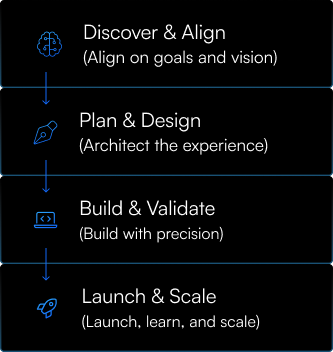
A structured delivery model that keeps strategy, execution, and growth tightly connected.
WHY MATELLIO
Why Enterprise Leaders Choose Matellio
We bring strategic clarity, domain depth, and engineering rigor to help enterprises modernize with confidence. From legacy transformation to AI-enabled operations, we build secure, scalable platforms that support business resilience, operational efficiency, and long-term growth.
500+
Projects Delivered
300+
Global Clients
10+
Years of Experience
4.8/5
Rated on Clutch
Frequently Asked Questions
Why consider custom enterprise software at all?
When off‑the‑shelf tools cap your growth or complicate operations, custom enterprise software gives you a platform built around your operating model, risk profile, and scale ambitions—not the other way around.
Where does next‑gen technology actually move the needle?
AI, cloud-native architecture, and automation matter when they shorten cycle times, reduce manual work, and give leadership better visibility. If it doesn’t show up in P&L, risk, or customer experience, it is not a priority.
What problem does modernization really solve for us?
Modernization replaces fragile, expensive, slow‑moving legacy systems with a resilient foundation that can support new products, markets, and integration demands without constant firefighting.
How should we think about AI in enterprise software?
AI should enhance critical workflows and decisions—prioritization, forecasting, routing, exception handling—not exist as isolated pilots. The test is whether it improves quality, speed, or control at scale.
Why insist on cloud‑native and API‑first design?
Cloud‑native, API‑first platforms make it easier to scale, integrate, and evolve without major rewrites. That’s what allows you to add new capabilities or acquisitions without destabilizing the core.
How do we keep a custom build from becoming the next legacy system?
You avoid a new legacy trap by investing in architecture, not just features modular design, clear integration patterns, documentation, and a roadmap owned jointly by business and technology leaders.
What is the right way to measure success for a software initiative?
Success should be measured in business terms—cycle time, error rates, capacity, adoption, and margin impact—not just delivery against scope, budget, and timeline. >
What do you expect from our leadership team in an engagement?
We expect clear strategic priorities, access to decision‑makers, and sponsorship when trade‑offs arise. When CXO teams stay engaged, initiatives move faster and deliver more meaningful outcomes.
What distinguishes a strong enterprise software partner from a vendor?
A partner brings opinionated guidance on architecture and delivery, challenges assumptions when risk is high, and remains accountable for outcomes—not just code shipped.
How should we think about timeline and risk for a transformation program?
Break large programs into phases that each deliver tangible value and insight. This reduces risk, builds internal confidence, and gives you options as markets, budgets, or priorities shift.